How Shuffle Algorithms Influence Fairness Perceptions in Networked Card Platforms
Written by Yves Koch · Aug 4, 2026
How Shuffle Algorithms Influence Fairness Perceptions in Networked Card Platforms
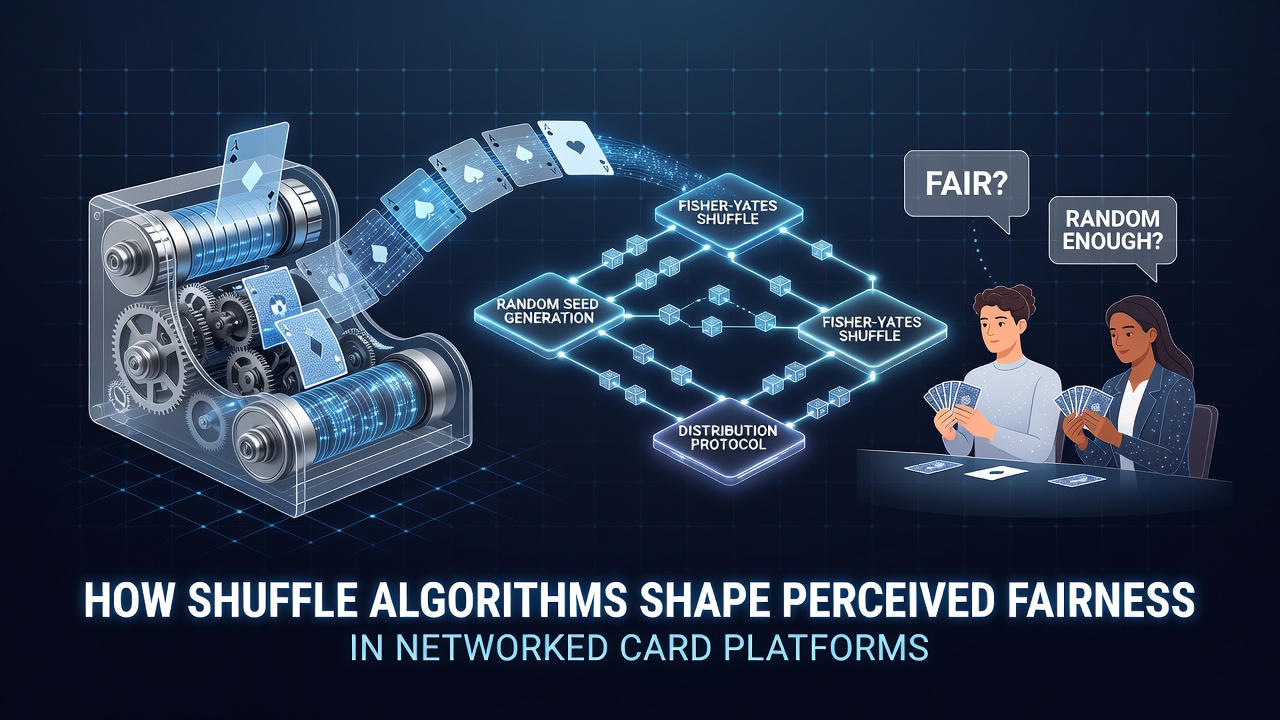
Networked card platforms rely on shuffle algorithms to generate card sequences that players encounter during games like poker and blackjack, and these systems determine whether outcomes feel random and equitable across distributed networks. Developers implement algorithms such as the modern Fisher-Yates shuffle combined with cryptographically secure pseudorandom number generators to produce permutations that avoid detectable patterns, while certification bodies verify compliance with technical standards that regulators enforce in licensed markets.
Technical Foundations of Card Shuffling in Digital Environments
Engineers start with a PRNG that seeds from hardware entropy sources or cryptographic libraries, then apply the Fisher-Yates method to rearrange a 52-card array in linear time without introducing bias from uneven swap probabilities. Platforms that skip proper implementation sometimes fall back on simpler methods like naive sorting of random values, which can cluster high cards or repeat sequences more often than chance predicts, and those deviations become noticeable when thousands of hands are logged and analyzed by independent testers. Research indicates that properly seeded 256-bit generators produce distributions that align with theoretical probabilities within statistical margins accepted by testing laboratories, whereas weaker seeds tied to system clocks have produced exploitable repeats in historical incidents reported across multiple jurisdictions.
Certification Protocols and Regulatory Oversight
Testing laboratories evaluate shuffle outputs against standards that require millions of simulated shuffles to confirm uniformity, independence between successive decks, and absence of serial correlation. In the United States the Nevada Gaming Control Board maintains technical requirements that operators must meet before deployment, and similar frameworks exist in other regions where data centers host the random number generation for global player pools. Observers note that August 2026 brought updated audit guidelines in several North American markets that now mandate continuous monitoring of live shuffle sequences rather than periodic spot checks, allowing regulators to detect any drift in generator behavior before it affects player sessions.
Operators integrate these certified modules into their servers so that every deal request triggers a fresh shuffle cycle that players cannot influence through connection timing or bet size, yet the underlying code remains opaque to end users. This opacity creates room for skepticism when losing streaks occur, even when statistical audits show no deviation from expected variance.
Player Perception and Trust Dynamics
Players form opinions about fairness through personal results, community discussions, and any public information about the platform's randomization methods. When a site publishes details about its shuffle implementation and third-party certification, observers report higher confidence levels in surveys conducted by industry research groups, whereas platforms that offer minimal disclosure see more frequent accusations of manipulation in forum threads and social media. Studies from academic institutions have examined how visualization tools that display shuffle progress or entropy levels can reduce distrust, because users gain a tangible sense that each hand originates from an unpredictable process rather than a predetermined sequence.
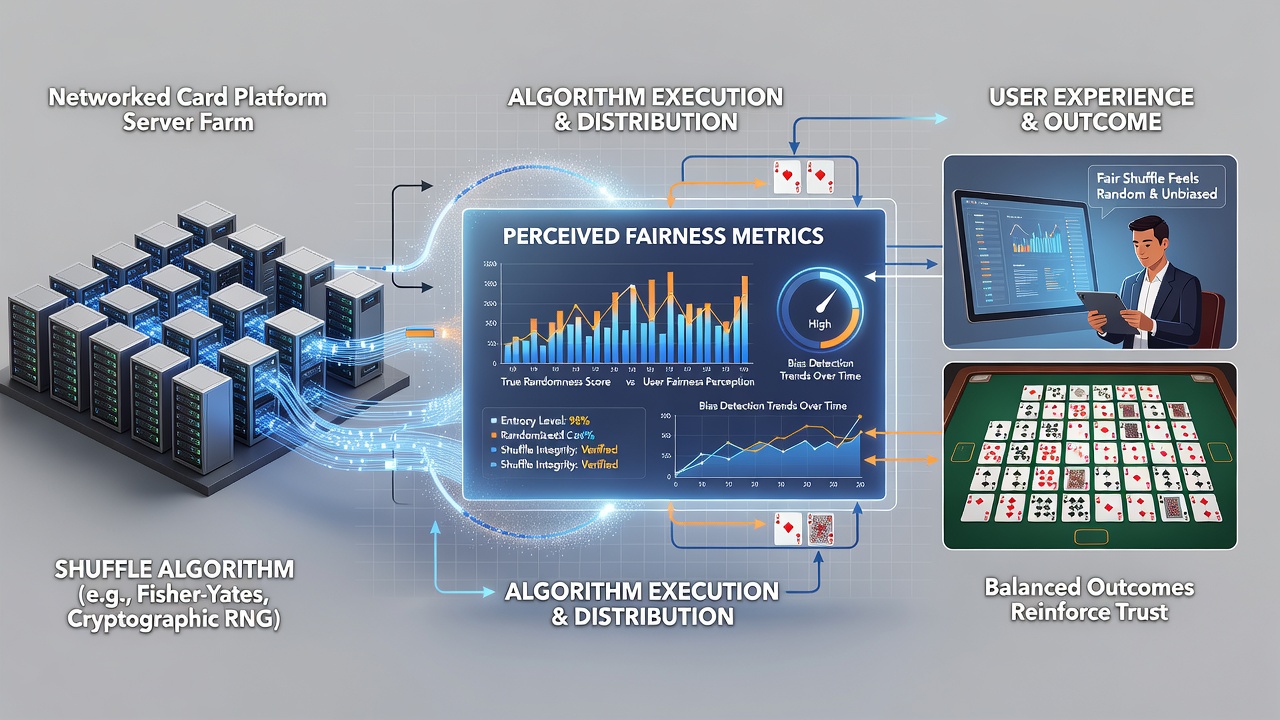
Network latency and multi-device synchronization add further layers, since distributed systems must ensure that the same deck state reaches all participants without desync errors that might suggest tampering. Engineers address these challenges through timestamped commits and cryptographic hashes that verify deck integrity at each step, and those measures help maintain the appearance of consistent randomness even during peak traffic periods.
Industry Standards and Recent Developments
Trade organizations such as the International Association of Gaming Regulators have published guidance documents that encourage uniform testing criteria across borders, reducing the chance that an algorithm approved in one market fails scrutiny elsewhere. Data from the Alcohol and Gaming Commission of Ontario shows that platforms submitting to annual re-certification experience fewer player complaints related to card distribution compared with those operating under older verification schedules. What's interesting is how minor changes in algorithm parameters, such as reseeding frequency, can shift the statistical profile enough to trigger re-evaluation even when overall randomness remains intact.
Take the case of a major platform that upgraded its generator in early 2026, after which independent audits confirmed improved performance on runs tests and serial correlation metrics, leading to renewed player confidence metrics tracked through retention data. Those who've studied complaint logs across several operators discover that transparency reports published on a quarterly basis correlate with lower dispute volumes, because players receive concrete evidence that shuffle integrity receives ongoing attention rather than one-time approval.
Conclusion
Shuffle algorithms sit at the intersection of mathematics, software engineering, and regulatory compliance in networked card environments, shaping both the actual randomness of outcomes and the degree to which participants accept those outcomes as legitimate. Continued refinement of testing protocols, combined with clearer communication from operators about the methods in use, supports the maintenance of trust across expanding player bases. As markets evolve through 2026 and beyond, the focus remains on verifiable technical performance that aligns with established probability models while meeting the expectations of diverse regulatory frameworks around the world.