Mapping Regulatory Influences on Progressive Prize Distributions Within Licensed Digital Gaming Networks
Written by Erik Friedrich · Aug 25, 2026

Mapping Regulatory Influences on Progressive Prize Distributions Within Licensed Digital Gaming Networks
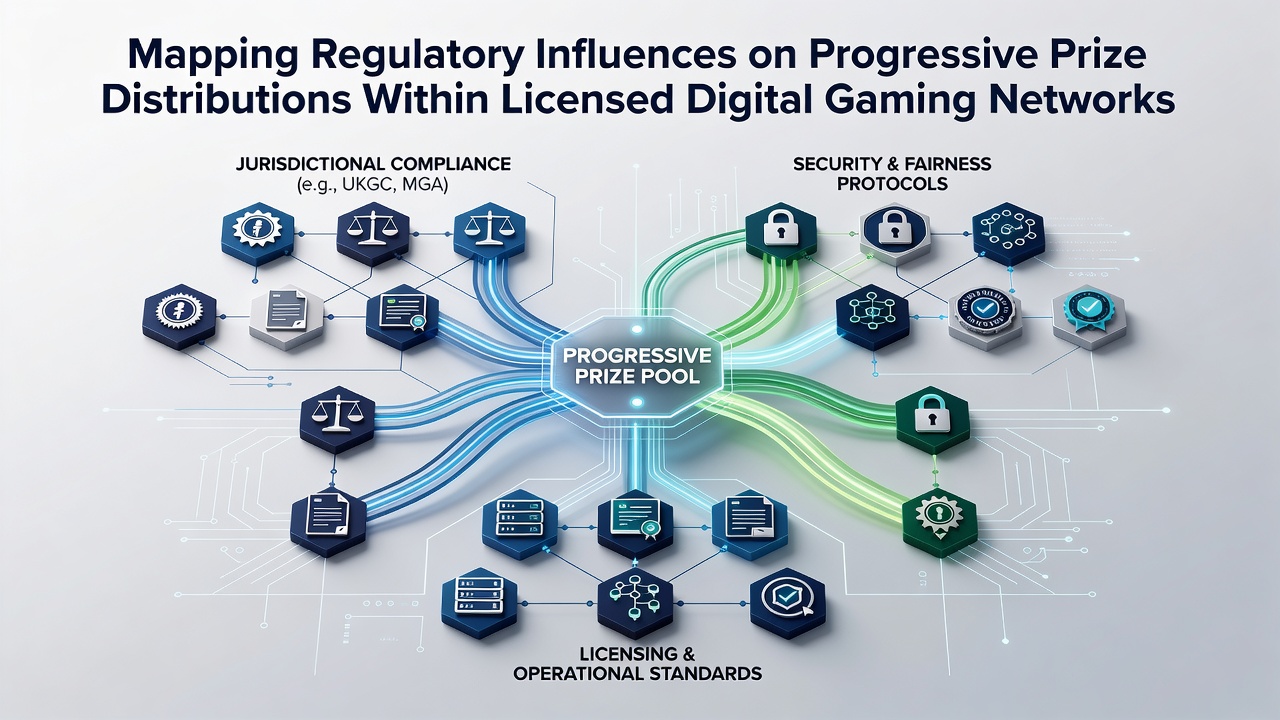
Progressive prize pools in licensed digital gaming networks operate under layers of regulatory oversight that dictate everything from contribution percentages to payout triggers and cross-jurisdictional sharing rules, and these frameworks continue to evolve as markets expand in 2026. Regulators in multiple regions set minimum seed values, cap operator rake percentages, and require independent certification of randomization systems before any progressive jackpot goes live.
Core Regulatory Mechanisms Across Jurisdictions
Authorities such as the New Jersey Division of Gaming Enforcement and the Alcohol and Gaming Commission of Ontario establish precise formulas that determine how much of each wager feeds into progressive pools, and these formulas often include mandatory reserve contributions that protect against underfunded jackpots when networks span multiple operators. Data from the Nevada Gaming Control Board shows that progressive contributions in digital table and slot products must remain segregated from general revenue accounts, with monthly reconciliation reports submitted to prevent commingling of funds.
European frameworks add another dimension through national licensing bodies that coordinate on shared progressive systems, requiring operators to demonstrate that prize distributions comply with both local fairness standards and cross-border data protection rules. Researchers tracking regulatory filings note that these requirements frequently result in staggered payout schedules where larger progressives trigger only after specific aggregate wager thresholds are met across the network.
Impact on Prize Allocation and Player Visibility
Rules governing visibility of progressive meters differ sharply by region, with some regulators mandating real-time public displays while others require only post-session summaries, and these differences directly shape how operators configure their digital interfaces. In markets where disclosure is strict, networks must update jackpot values at fixed intervals, typically every few seconds, and any lag beyond permitted thresholds triggers automatic compliance reviews.
August 2026 brought updated guidelines from several Australian state regulators that now require progressive systems to publish historical payout frequency data alongside current meter values, giving players clearer information on expected distribution patterns. Observers tracking these changes report that operators responded by integrating compliance dashboards that automatically flag when contribution rates deviate from approved parameters.
Certification Protocols and Technical Compliance
Independent testing laboratories must verify that progressive engines correctly calculate contributions, apply regulatory caps, and reset meters according to jurisdiction-specific rules before networks receive operational approval. Those laboratories also audit the cryptographic sealing of jackpot values to ensure no external manipulation can alter distributions once a progressive is active.
Studies compiled by research institutions examining multi-jurisdictional networks reveal that operators often maintain separate progressive ledgers for each licensed market even when the underlying game software is identical, because contribution rates, minimum wagers, and reset amounts vary. This separation prevents regulatory conflicts when a single player participates across borders through different licensed entities.
Recent Developments and Cross-Border Coordination
Cooperation agreements between Canadian provincial regulators and U.S. state agencies have begun to address how progressive prizes accumulated in one jurisdiction can legally transfer when players migrate to another licensed platform, and these agreements include standardized reporting templates that reduce administrative duplication. Figures released in mid-2026 indicate that coordinated audits now cover roughly 40 percent of cross-border progressive traffic in North America.
Industry associations have published voluntary best-practice documents that align with mandatory rules, covering topics such as minimum reserve funding, dispute resolution timelines, and notification procedures when a progressive jackpot exceeds certain thresholds. These documents help operators standardize internal controls without replacing formal regulatory approvals.
Conclusion
Regulatory mapping of progressive prize distributions continues to grow more detailed as digital networks expand, with each jurisdiction adding specific constraints on contribution rates, disclosure, and fund segregation. Operators that maintain jurisdiction-specific ledgers and automated compliance monitoring stay aligned with these evolving requirements while delivering progressive experiences across licensed platforms.