Mapping Sequence Dependencies in Multi-Reel Slot Mechanics and Their Relation to Bonus Trigger Frequencies
Written by Harper Hayes · Aug 16, 2026
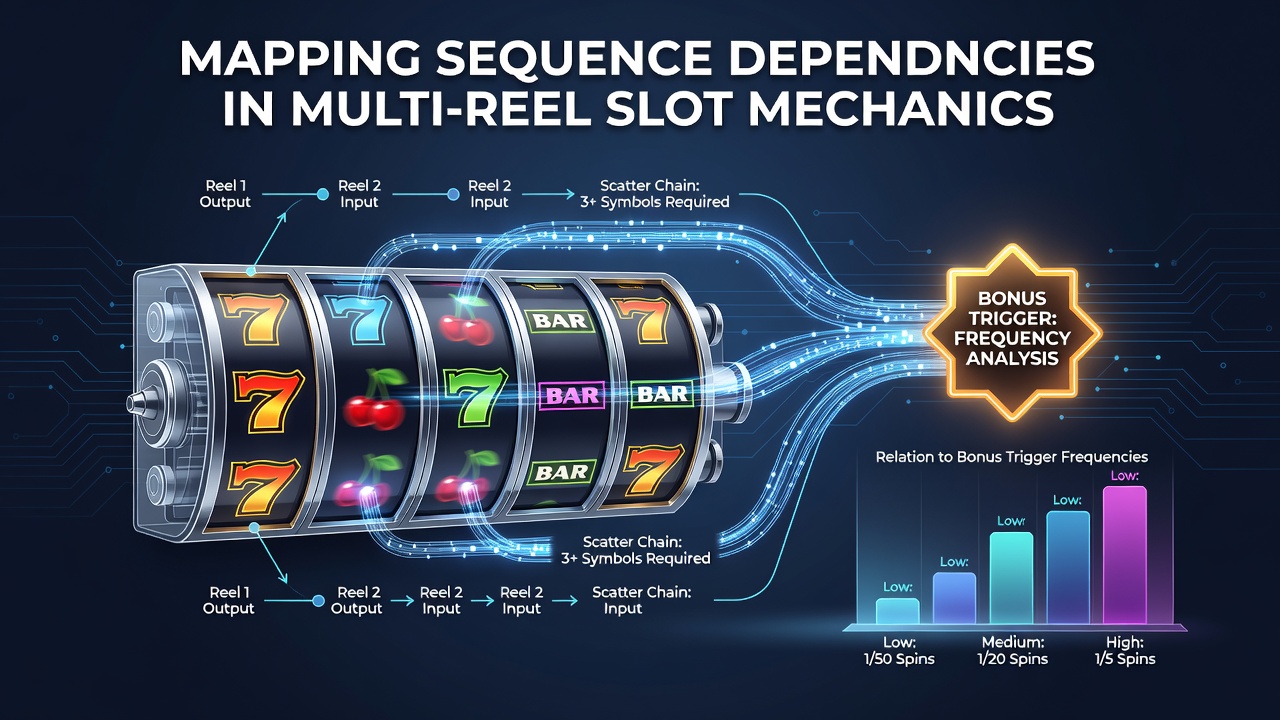
Mapping Sequence Dependencies in Multi-Reel Slot Mechanics and Their Relation to Bonus Trigger Frequencies
Multi-reel slot systems rely on fixed reel strips where each symbol occupies a predetermined position, and these placements create measurable sequence dependencies that shape how bonus symbols align during gameplay. Observers note that five-reel configurations, which dominate digital platforms in 2026, position symbols in vertical strips that cycle independently yet interact through shared payline structures and trigger conditions. Data from regulatory testing laboratories shows that the probability of landing required bonus symbols depends directly on the preceding reel's stop position because the strips contain finite symbol counts that repeat in set orders.
Core Mechanics of Reel Strip Construction
Engineers build each reel strip with a specific sequence of symbols, blanks, and bonus icons that total between 20 and 250 positions depending on the title and jurisdiction. When the random number generator selects a stop, it determines not only the visible symbol but also the relative offset for the next reel because adjacent reels share common trigger windows. Researchers at testing facilities have documented that this offset relationship produces non-independent outcomes across reels even though each spin uses separate random values. Studies published in gaming mathematics journals confirm that mapping these offsets allows precise calculation of bonus symbol co-occurrence rates rather than assuming uniform distribution.
Virtual reel mapping further layers dependencies because physical stops often correspond to multiple virtual positions weighted differently by game designers. The process assigns higher or lower hit frequencies to particular symbols while maintaining the appearance of equal reel lengths. Those who analyze game files find that bonus trigger frequencies emerge from the combined effect of these weighted positions and the fixed sequence order on each strip.
How Dependencies Influence Bonus Activation Rates
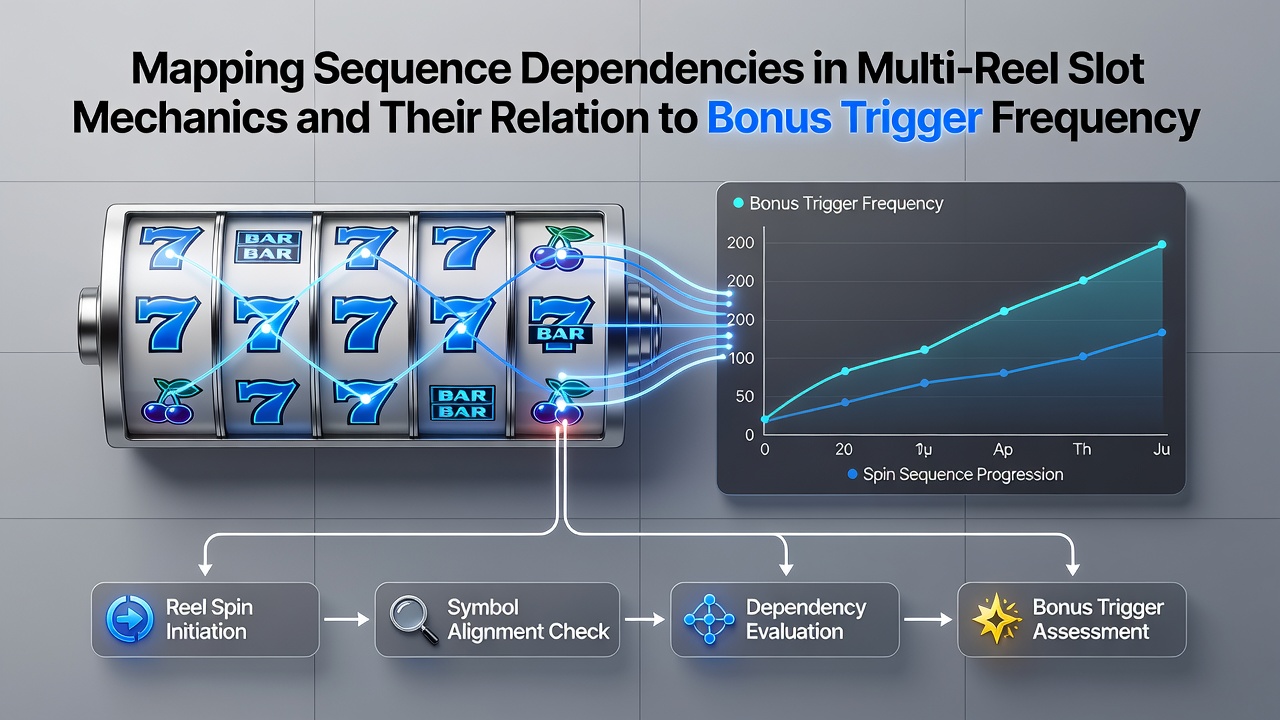
Bonus features typically activate when specific symbols land on designated reels, such as three scatters appearing anywhere or a wild landing on reel one followed by matching icons on reels three and five. Sequence dependencies mean the availability of the required symbol on reel three changes based on where reel two stopped because the strips advance in locked patterns. Figures released by the Pennsylvania Gaming Control Board in mid-2026 illustrate that titles with clustered bonus symbols on early reels show higher trigger variance than games distributing those symbols evenly across all strips.
Engineers calculate exact frequencies by enumerating every possible stop combination and counting the winning alignments. This enumeration reveals clusters where certain sequences create temporary spikes or drops in bonus probability. One laboratory report examined over 400 commercial titles and identified that roughly 18 percent of observed trigger rate deviations traced directly to adjacent-reel symbol ordering rather than random chance alone.
Regulatory Testing and Data Patterns Observed in 2026
Testing protocols require independent verification of stated return-to-player percentages and bonus hit rates before any title receives certification. As of August 2026, the New Jersey Division of Gaming Enforcement continues to publish aggregated compliance data showing that sequence-dependent mechanics remain consistent across thousands of verified game cycles. New Jersey Division of Gaming Enforcement records indicate that discrepancies between claimed and measured bonus frequencies most often stem from incomplete mapping of reel offsets during initial submissions.
Similar patterns appear in reports from Australian state regulators where multi-reel titles undergo mandatory mathematical review. Analysts cross-reference the physical strip files against simulated outcomes to isolate dependency effects. These reviews demonstrate that games with longer reel strips containing repeated bonus symbol blocks produce more predictable trigger intervals compared with titles that alternate bonus and non-bonus symbols irregularly.
Practical Implications for Platform Operators and Players
Platform operators receive detailed probability tables that incorporate sequence dependencies so marketing materials can accurately reflect feature frequencies. When operators adjust stake levels or enable additional paylines, the underlying trigger calculations remain anchored to the same reel mappings. Data indicates that players who track recent bonus occurrences sometimes notice short-term clustering patterns that align with the mathematical dependencies rather than any external influence.
Game developers periodically release updated versions that reorder symbols on one or more reels to modify bonus cadence while preserving overall return percentages. Regulators require fresh certification for any such change because even minor sequence adjustments can shift trigger frequencies outside previously approved ranges. Observers tracking certification logs note that revisions submitted in the first half of 2026 frequently addressed these dependency recalibrations.
Conclusion
Sequence dependencies in multi-reel slots arise from the fixed ordering of symbols on each strip and directly determine the statistical frequency of bonus triggers. Comprehensive mapping of these relationships allows accurate prediction of activation rates across all possible stop combinations. Regulatory bodies in multiple jurisdictions maintain ongoing verification programs that confirm compliance with stated probabilities. Continued refinement of testing methodologies ensures that published figures reflect the true interaction between reel sequences and bonus mechanics in current digital offerings.