The Influence of Sound Design Elements on Decision-Making Processes in Digital Blackjack Sessions
Written by Erik Friedrich · Sep 26, 2026
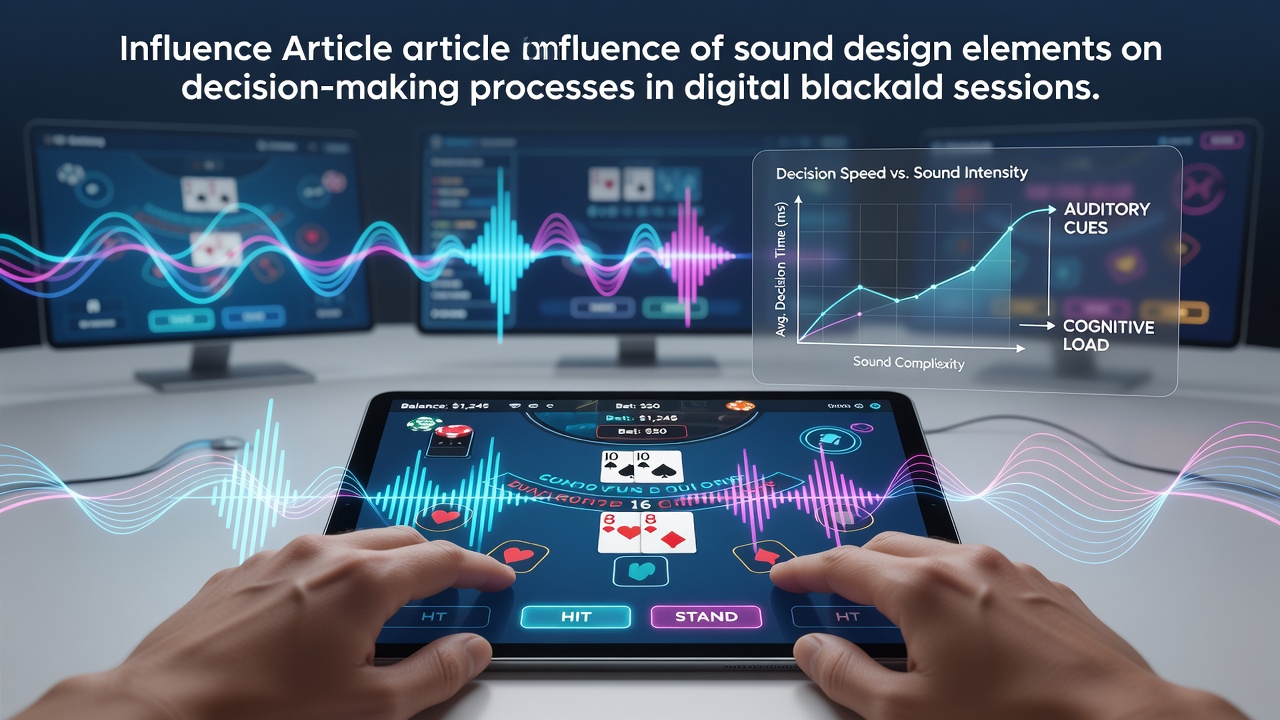
The Influence of Sound Design Elements on Decision-Making Processes in Digital Blackjack Sessions
Digital blackjack platforms incorporate layered audio cues that range from card shuffling effects to escalating win chimes, and these elements interact directly with player choices during each hand. Observers note that background tracks shift in tempo as bets increase, while distinct sounds mark successful splits or insurance decisions. Research indicates that such audio layers guide attention toward specific actions without players realizing the connection at first glance.
Core Sound Components in Digital Blackjack Interfaces
Card flip sounds, chip stacking clicks, and dealer voice prompts form the basic set of audio tools that appear across most platforms, and each one carries measurable timing tied to decision windows. Data from platform analytics reveals that players pause longer after hearing a low-frequency loss tone compared with a neutral shuffle loop. In September 2026, aggregated session logs from multiple operators showed that win celebration tracks lasting under two seconds correlated with faster subsequent bet placements, whereas extended celebratory sequences delayed the next round by an average of four seconds.
Ambient music layers adjust volume and key based on remaining deck penetration, yet the changes remain subtle enough that most users describe them only as atmospheric. Those who have examined session heatmaps find that rising musical tension aligns with higher average wager amounts, particularly when players reach the final third of a shoe. Experts have observed that muting these ambient tracks reduces the frequency of double-down attempts by measurable margins in controlled tests.
How Audio Cues Shape Specific Choices
Hit and stand decisions receive the most direct influence from immediate feedback sounds, and researchers have documented that a sharp, rising tone after a low card draw increases the likelihood of another hit within the same hand. Conversely, a descending minor-key sting following a bust prompt leads to quicker stand selections on the following round. Platform telemetry collected across European and North American markets demonstrates that these patterns hold across both casual and high-volume sessions.
Bet sizing adjustments also respond to cumulative sound history, since repeated win chimes build an auditory expectation that encourages larger follow-up wagers. Studies from the University of Sydney’s gambling research unit found that players exposed to consistent positive audio feedback raised their average bet size by 12 percent over twenty hands compared with silent control groups. The same experiments showed that loss sounds spaced at irregular intervals prompted more conservative sizing on the next hand, even when the mathematical expectation remained unchanged.
Platform Variations and Regional Data Patterns
Operators in different jurisdictions apply distinct audio philosophies, and these choices produce observable differences in session behavior. Canadian-regulated platforms tend toward restrained sound palettes that emphasize clarity over drama, while certain Asian market interfaces layer richer orchestral elements during high-stakes tables. Figures released by iGaming Ontario indicate that sessions featuring minimal audio variation maintain steadier bet distributions throughout extended play periods.
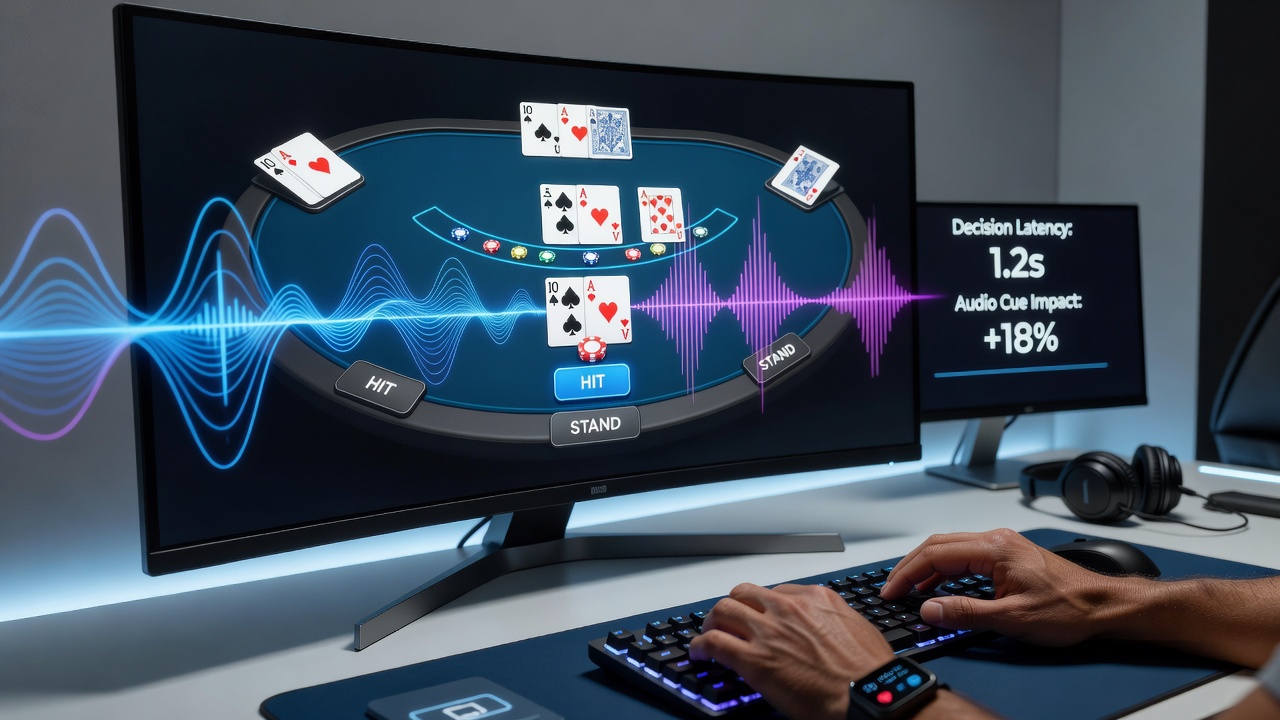
Multi-provider lobbies add another dimension because players encounter mismatched sound libraries when switching between suppliers, and transition effects sometimes disrupt established decision rhythms. Data shows that brief silence during provider handoffs coincides with temporary drops in aggressive play for roughly three subsequent hands. Those who track cross-platform behavior note that players adapt within minutes, yet the initial adjustment period still registers in aggregate statistics.
Measurement Approaches and Recent Findings
Eye-tracking combined with audio logging provides one method for linking sound events to decision latency, and recent trials conducted in laboratory settings confirm that certain win tones shorten reaction times on insurance bets. A 2025 report compiled by the Nevada Gaming Control Board highlighted that digital blackjack variants with dynamic sound scaling recorded higher per-hand wager volatility than static-audio counterparts. The report also noted that these differences appeared most pronounced among players who completed more than fifty hands per session.
Longitudinal data collected through September 2026 continues to map how repeated exposure to specific sound sets alters risk tolerance over weeks rather than single sessions. Researchers discovered that players who regularly encounter the same win melody set gradually increase their average stake size even when overall win rates stay constant. Such adaptation occurs without conscious awareness in the majority of tracked cases.
Conclusion
Sound design elements in digital blackjack therefore function as active variables within the decision environment, shaping timing, bet sizing, and risk selection through consistent auditory associations. Platform operators continue to refine these layers based on session metrics, while regulatory bodies in multiple regions monitor the resulting behavioral data. The interplay between audio cues and player choices remains a measurable factor in how digital blackjack sessions unfold across current market offerings.